
Intradiscal Stem Cell Injection
Stem Cell Therapy for
Herniated Disc & Sciatica
The world’s most experienced intradiscal stem cell clinic — treating degenerative disc disease, herniated discs, and sciatica without surgery. 20 minutes from San Diego.
4,000+
Direct disc injections performed
78.1%
Patient improvement at 10 years
85%
MRI-confirmed disc bulge reduction
77%
Patients avoided surgery in studies
About This Program
The Most Common Reason Patients Come to CPI — And the Treatment We’ve Mastered
Cellular Performance Institute has performed over 4,000 direct intradiscal stem cell injections, more than any other facility worldwide.
That number isn’t a marketing claim. It’s the product of years of focused clinical experience treating patients with degenerative disc disease, bulging discs, and disc herniations who were told surgery was their only option — or whose surgery failed to relieve their pain.
Back pain is the leading cause of disability globally, affecting over 619 million people. Disc-related conditions — such as degenerative disc disease, herniated discs, and bulging discs — account for at least 40% of all chronic low back pain cases. And the sciatic nerve pain that radiates from a compressed or inflamed disc is one of the most debilitating pain experiences a person can have.
Surgery is frequently recommended. But for the majority of patients with disc-related pain, it doesn’t have to be.
This page explains exactly how CPI’s intradiscal stem cell injection protocol works, what the clinical evidence shows, who is a candidate, and what patients can realistically expect.
Understanding the Condition
Disc-Related Back Pain and Sciatica
Before explaining the treatment, it helps to understand why disc conditions are so difficult to treat and why stem cells are uniquely suited to address them.
The Intervertebral Disc
Your spine is made up of 33 vertebrae separated by intervertebral discs — tough, fibrous structures that act as shock absorbers and allow spinal movement. Each disc has two components:
The nucleus pulposus — a gel-like inner core that provides cushioning
The annulus fibrosus — a tough outer ring of fibrous tissue that contains the nucleus
When a disc is healthy, it maintains height, hydration, and structural integrity. When it degenerates, herniates, or bulges, it loses these properties — and the consequences range from localized back pain to severe radiating nerve pain.
Why Discs Don’t Heal on Their Own
The intervertebral disc is one of the most poorly vascularized structures in the human body. Unlike muscles, tendons, or even bone, discs have almost no direct blood supply. Nutrients and oxygen reach disc cells through diffusion — a slow, inefficient process.
This lack of blood supply means two things:
1. Damaged disc tissue cannot access the healing cells and growth factors that repair other tissues
2. The disc environment is naturally hypoxic (low in oxygen), which creates a hostile environment for standard cell therapies
This is precisely why CPI’s hypoxic mesenchymal stem cells are so well-suited for disc treatment. Our cells are cultured in low-oxygen conditions that replicate the disc’s natural environment — making them significantly more viable and effective when injected directly into disc tissue than standard stem cells cultured in normal oxygen conditions.
Degenerative Disc Disease
Degenerative disc disease (DDD) is not technically a disease — it’s a term for the progressive breakdown of intervertebral disc tissue over time. Discs lose height, water content, and structural integrity. The result is:
Chronic low back pain (discogenic pain)
Reduced spinal flexibility and range of motion
Nerve compression as disc height decreases
Accelerated wear on adjacent vertebrae and facet joints
Severe pain (sciatic nerve)
DDD is one of the most common conditions CPI treats, and one in which intradiscal stem cell injection has the most compelling long-term evidence.
Herniated and Bulging Discs
A herniated disc occurs when the nucleus pulposus breaks through the annulus fibrosus and protrudes into the spinal canal. A bulging disc involves the disc expanding outward without rupturing the annulus.
Both conditions can compress nearby spinal nerves, causing:
Sharp, shooting pain in the back, buttocks, or legs
Sciatic nerve pain (sciatica) — radiating pain down one or both legs
Numbness, tingling, or weakness in the legs or feet
Pain that worsens with sitting, bending, or lifting
MRI Before and After Results on a Severely Herniated Disc
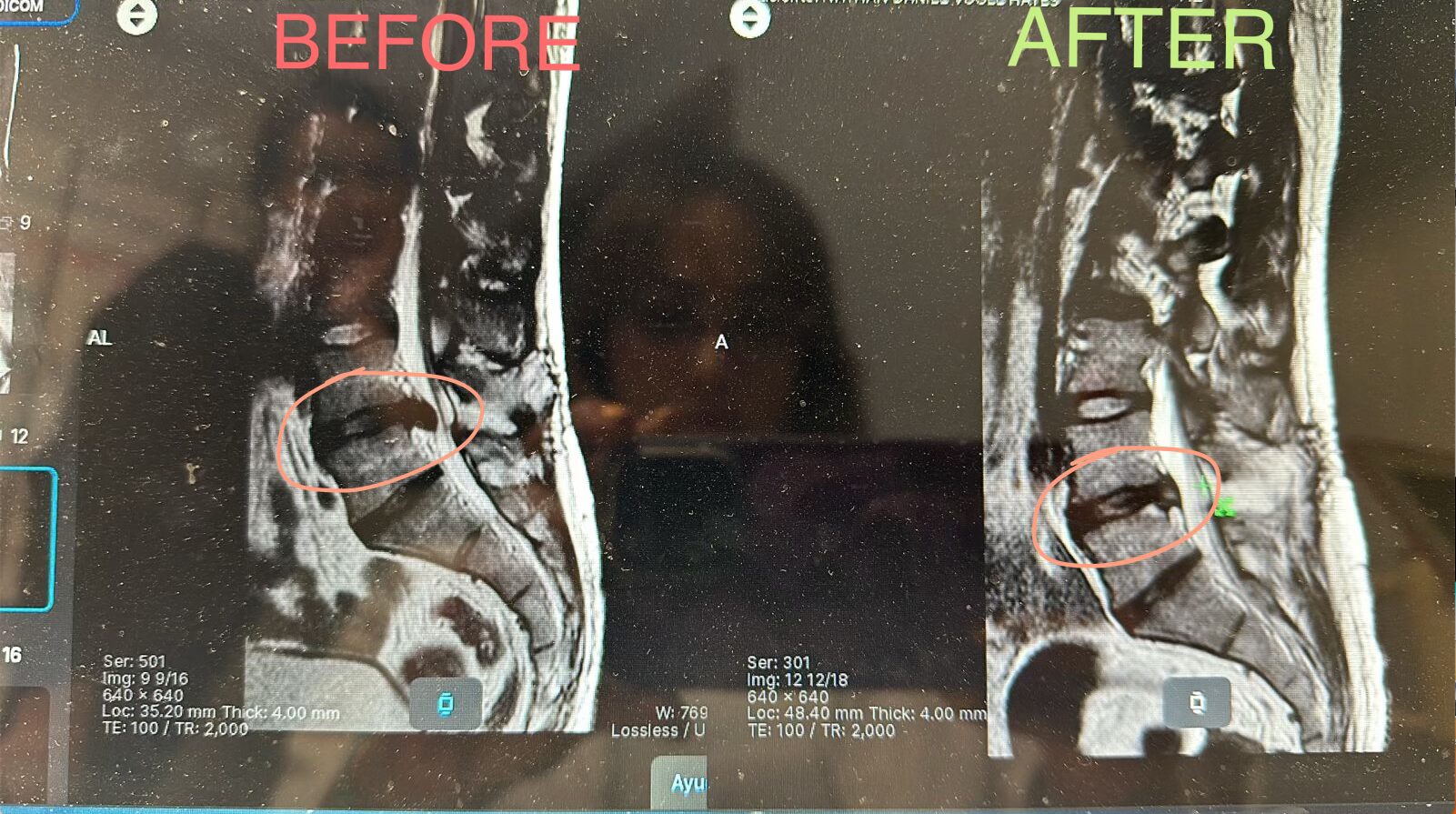
Stem Cells vs. Herniated Disc — The MRI Doesn’t Lie
Real before-and-after MRI results from CPI patient
Sciatic Nerve Pain and Disc Compression
The sciatic nerve is the largest nerve in the body, running from the lower spine through the buttocks and down each leg. When a herniated or bulging disc at L4-L5 or L5-S1 compresses the nerve root, the result is sciatica — one of the most painful and disabling conditions CPI treats.
Conventional treatments for sciatica — NSAIDs, epidural steroid injections, and physical therapy — address inflammation and symptoms. They do not address the disc damage causing the nerve compression. Surgery (discectomy or spinal fusion) removes or stabilizes the problem but carries significant risks and recovery time.
CPI’s intradiscal stem cell approach addresses the disc itself — reducing inflammation, promoting tissue regeneration, and relieving nerve compression at the source.
Published Research
What the Clinical Evidence Shows
CPI’s intradiscal stem cell protocol is backed by a growing body of peer-reviewed clinical research. Here is what the evidence demonstrates:
78.1%
Patient-reported improvement at 10 years (SANE score)
60%
Average improvement in pain & function at 6 years
85%
Patients with MRI-confirmed disc bulge reduction
77%
Patients who avoided surgery in published studies
Longest Follow-Up Study
Long-Term Outcomes: Up to 10 Years of Follow-Up
2025, PubMed Central | PMID 41153652
A 2025 study representing the longest known follow-up data for intradiscal MSC therapy tracked patients treated with culture-expanded mesenchymal stem cells for discogenic low back pain.
Results
78.1% improvement in patient-reported outcomes at 10 years (SANE score)
60% improvement at 6 years (SANE score)
Significant reductions in pain scores (NRS) at 6 months, 3 years, and 6 years (p < 0.01)
Zero adverse events reported across the entire follow-up period
This is the most compelling long-term evidence available for intradiscal stem cell therapy, demonstrating that results are not only durable but continue to improve over time.
MRI-Confirmed Structural Evidence
Disc Bulge Reduction: Structural Evidence of Regeneration
Centeno et al. | PMC5610473
Research by Centeno et al. tracking 33 patients treated with intradiscal MSCs showed:
Results
85% of patients had a reduction in disc bulge size on follow-up MRI
60% average improvement in pain and function over 6 years
Results continued improving beyond the initial treatment period
These are not just pain scores. MRI evidence of disc bulge reduction means the treatment is producing actual structural changes in disc tissue — not just masking symptoms.
Surgery Avoidance Data
Avoiding Surgery: Real-World Impact
Pettine et al., 26-patient study | PMID 28748380
Results
Average pain scores decreased significantly for up to 3 years
Only 6 of 26 patients (23%) progressed to requiring surgical intervention
The remaining 77% avoided surgery entirely
For patients facing a spinal fusion recommendation, this data is significant. The majority of patients treated with intradiscal stem cells in published research avoided the surgery they were told they needed.
Phase IIB Randomized Controlled Trial
The DREAM Study: Double-Blind RCT, 2025
Vadalà et al., JOR Spine, 2025 | PMID 40462867
A 2025 Phase IIB double-blind randomized controlled trial evaluated intradiscal MSC injections in 52 patients with chronic low back pain due to moderate-to-advanced multilevel disc degeneration.
Results
BM-MSC injections were well-tolerated with no major adverse events
Structural improvements observed: significant increases in disc height index (DHI) at 3 and 6 months
Improvements in T2 relaxation times (indicating disc hydration and tissue quality)
Confirms both the safety profile and structural regenerative effects of intradiscal MSC therapy
Why CPI’s Results Exceed Published Research
Most published studies use autologous (self-derived) bone marrow MSCs — cells harvested from the patient’s own bone marrow — or at best, normal oxygen level stem cells. CPI uses lab-expanded hypoxic umbilical cord MSCs, a fundamentally different and superior approach:
Higher cell counts — 10–40 million vs. 1–5 million in most studies
Cells cultured specifically for hypoxic disc environments
Consistent quality from a characterized master cell bank (not variable patient-to-patient)
Combined with NAD+, HBOT, and PEMF for a comprehensive regenerative protocol
The published research showing 60–78% improvement represents a lower benchmark than what CPI’s protocol delivers. Our 4,000+ procedure experience and comprehensive 4-part protocol consistently produce outcomes that exceed the published literature.
Treatment Details
CPI’s Intradiscal Stem Cell Injection Protocol
Why Direct Disc Injection Matters
Most stem cell clinics offering “back pain treatment” administer cells intravenously or via epidural injection — neither of which delivers cells directly to the damaged disc. IV administration is systemic. Epidural injection places cells in the epidural space around the spinal cord, not inside the disc itself.
CPI performs direct intradiscal injection — cells are delivered precisely into the nucleus pulposus of the affected disc under fluoroscopic (X-ray) guidance. This is a technically demanding procedure that requires significant expertise and specialized equipment.
With over 4,000 direct disc injections performed, CPI has more intradiscal injection experience than any other facility in the world. That experience matters — both for procedural safety and for optimizing cell placement and outcomes.
Joe Rogan & UFC Fighter Eryk Anders
Discussing the impact of direct disc injections with stem cell treatments at CPI
Joe Rogan & Pro Surfer Shane Dorian
Discussing hypoxic stem cells for disc injections
The 4-Part CPI Disc Protocol
Part 1
Hypoxic MSCs — Direct Intradiscal Injection
Produced in CPI’s in-house ISO-7 certified cGMP laboratory from a characterized umbilical cord tissue master cell bank.
Key specifications:
Cell count: 10–40 million viable cells per disc level
Delivery: Fluoroscopy-guided direct injection into the nucleus pulposus
Hypoxic expansion — cultured in low-oxygen conditions matching the disc’s environment
Every batch tested for viability, sterility, and potency
Once injected, hypoxic MSCs:
Secrete growth factors (TGF-beta, IGF-1, BMP-2) that stimulate disc cell regeneration
Differentiate into nucleus pulposus-like cells to replace damaged disc tissue
Modulate the inflammatory environment within the disc
Promote extracellular matrix production to restore disc height and hydration
Reduce the inflammatory signals that cause nerve compression and sciatic pain
Part 2
NAD+ IV Therapy
Administered before the disc injection, NAD+ IV therapy serves two critical functions in disc treatment:
Restores cellular energy production in disc cells that have been metabolically compromised by degeneration
Activates sirtuins and PARP enzymes that repair DNA damage in disc tissue
Enhances stem cell activation and integration post-injection
Reduces systemic inflammation that contributes to disc degeneration
The avascular nature of the disc means disc cells are already energy-compromised. NAD+ restores the metabolic foundation that allows stem cells to function effectively once injected.
Part 3
Hyperbaric Oxygen Therapy (HBOT)
HBOT is particularly valuable for disc treatment because it addresses the fundamental challenge of disc healing — poor oxygen delivery.
By breathing 100% oxygen at increased atmospheric pressure, HBOT dissolves oxygen directly into blood plasma. This oxygen-rich environment:
Reaches disc tissue that normal blood flow cannot adequately supply
Supports stem cell survival and differentiation in the post-injection period
Reduces inflammatory mediators that perpetuate disc degeneration
Stimulates the body’s own stem cell mobilization — studies show HBOT can increase circulating stem cells up to 8-fold
Promotes collagen and proteoglycan synthesis essential for disc matrix restoration
Part 4
PEMF Therapy (Pulsed Electromagnetic Field)
PEMF therapy’s ability to stimulate cellular repair at the electromagnetic level makes it a natural complement to intradiscal treatment:
Penetrates deep spinal tissue to reach disc and vertebral structures
Reduces inflammatory cytokine production in degenerating discs
Supports bone remodeling at adjacent vertebral endplates
Improves nerve function in compressed or irritated nerve roots
Provides immediate pain relief while longer-term disc regeneration proceeds
Shown in research to promote nucleus pulposus cell proliferation and proteoglycan synthesis
What We Treat
Conditions We Treat with Intradiscal Stem Cell Injection
Degenerative Disc Disease (DDD)
The most common condition we treat. DDD involves progressive loss of disc height, hydration, and structural integrity — leading to chronic discogenic back pain, reduced mobility, and eventual nerve compression.
Our intradiscal protocol directly addresses the degenerative process:
Stem cells replenish the disc’s depleted cell population
Growth factor secretion stimulates matrix regeneration
Anti-inflammatory effects slow further degeneration
Disc height restoration reduces nerve compression
Long-term data shows 60–78% sustained improvement
Levels most commonly treated: L3-L4, L4-L5, L5-S1
Herniated Discs
A herniated disc creates both structural damage and an intense local inflammatory response. The herniated material irritates nearby nerve roots, causing radiating pain, numbness, and weakness.
Intradiscal stem cell injection for herniated discs:
Reduces the inflammatory cascade that sensitizes nerve roots
Supports annular repair to contain the herniation
Promotes resorption of herniated disc material over time
Published research shows 85% of patients achieve a reduction in disc bulge size on MRI
Relieves sciatic nerve compression by addressing the disc, not just the nerve
Bulging Discs
A bulging disc — in which the disc expands outward without rupturing — is often a precursor to herniation and a common cause of both local back pain and nerve compression.
Our protocol supports annular reinforcement and reduces the inflammatory environment that drives further bulging.
Sciatic Nerve Pain from Disc Compression
Sciatica caused by disc herniation or degeneration at L4-L5 or L5-S1 is one of the conditions where CPI’s intradiscal approach delivers the most dramatic results.
By treating the disc directly, rather than just managing the nerve, we address the source of compression. As disc inflammation resolves and tissue regenerates, nerve root irritation decreases, and sciatic symptoms improve.
Patients typically notice:
Reduction in leg pain and radiating symptoms within 4–8 weeks
Improved nerve function (reduced numbness and tingling) at 1–3 months
Continued improvement in sciatic symptoms over 6–12 months
Failed Back Surgery Syndrome
Up to 40% of spinal surgery patients report no significant improvement in pain after surgery. For patients who have undergone discectomy, laminectomy, or spinal fusion without adequate relief, CPI’s intradiscal protocol offers a genuine alternative.
Post-surgical patients present unique challenges — altered anatomy, scar tissue, and often multiple levels of involvement. CPI’s experience with over 4,000 intradiscal injections includes a significant population of post-surgical patients for whom conventional medicine has run out of answers.
Multi-Level Disc Disease
Many patients present with degeneration or herniation at multiple spinal levels. CPI can treat multiple disc levels in a single session — a significant advantage over surgical approaches, where multi-level fusion carries substantially higher risk and recovery burden.
Stem Cell Treatment Success
After failed back surgeries
Former US Army Delta Force Operator
Receives stem cells for multiple bulging discs
Who Qualifies
Who Is a Candidate for Intradiscal Stem Cell Injection?
Our intradiscal protocol is appropriate for patients who:
Have been diagnosed with degenerative disc disease, disc herniation, or bulging discs via MRI
Experience chronic back pain (3+ months) that has not responded adequately to conservative treatment
Have sciatic nerve pain or radiculopathy from disc compression
Are seeking to avoid spinal surgery (discectomy, laminectomy, or fusion)
Have had spinal surgery that did not adequately relieve pain
Are generally in good health without active infection or malignancy
Have realistic expectations about the regenerative timeline (results develop over 1–6 months)
Conditions That May Affect Candidacy
Severe spinal instability or spondylolisthesis
Complete annular rupture with significant disc height loss
Active infection
Certain autoimmune conditions or immunosuppressive medications (discuss with our team)
Morbid obesity (BMI >40)
The best way to determine candidacy is a free consultation with our medical team, who will review your MRI, medical history, and treatment goals to provide an honest assessment.
The Treatment Journey
What to Expect: From Consultation to Recovery
01
Free Consultation and MRI Review
Your journey begins with a free consultation. Our medical team reviews your MRI or CT imaging (current imaging preferred, within 12 months), pain history, duration, and previous treatments, surgical history if applicable, current medications and overall health, and treatment goals and expectations.
We provide an honest candidacy assessment and a specific treatment plan before you commit to anything.
02
Pre-Treatment Preparation
If you are a candidate, we provide detailed pre-treatment instructions, including medication guidelines (certain anti-inflammatories should be paused before treatment), travel and logistics guidance for patients domestic and international, pre-treatment lab work if indicated, and what to bring and what to expect for treatment week.
03
Treatment Days at CPI — 4–6 Hours, Monday–Friday
Three NAD+ IV Infusions (1–2 hours)
Your treatment begins with NAD+ IV therapy to prime cellular energy systems and prepare your disc cells for maximum regenerative response.
Procedure: Intradiscal Stem Cell Injection — normally on Wednesdays or Thursdays
Under fluoroscopic guidance, our physician precisely navigates a needle to the targeted disc level(s) and delivers your hypoxic MSCs directly into the nucleus pulposus. Local anesthesia is used; light anesthesia is required. The procedure is completed in under an hour for most patients, even when treating multiple levels.
Three HBOT Sessions (60–90 minutes)
Following disc injection, you undergo hyperbaric oxygen therapy. This critical step maximizes stem cell survival in the post-injection period and begins accelerating the disc’s oxygen-deprived healing environment.
Daily PEMF Therapy (10–20 minutes)
PEMF therapy completes your treatment, supports cellular integration, and provides immediate relief from procedural discomfort.
Post-treatment monitoring: Our team monitors you overnight on treatment day and the next two days before discharge. Most patients are comfortable enough after treatment to be up and walking.
04
Recovery and Results
See the full recovery timeline below.
What to Expect
Recovery and Results Timeline
Week 1–2
Rest recommended. Some patients experience soreness at the injection site — this is normal and resolves quickly. Avoid heavy lifting, prolonged sitting, and high-impact activity.
week 2-4
Activity can gradually increase. Many patients notice the first signs of reduced inflammation: less baseline pain, improved morning mobility, a reduction in leg symptoms, and sciatic symptoms.
Month 2-3
Significant improvement in most patients. Sciatic symptoms typically show meaningful reduction as disc inflammation resolves and nerve root pressure decreases. Back pain scores typically 40–60% improved from baseline.
Month 3-6
Ongoing disc tissue regeneration. MRI changes (increased disc height, improved hydration signals) may become visible. Most patients report 60–80% pain reduction. Return to normal activities, including exercise.
Month 6-12
Continued improvement as the regenerated disc matrix matures. Optimal results are typically achieved in this window. Some patients continue improving beyond 12 months.
Long-term
Published research shows sustained results at 6 and 10 years with no adverse events. Many patients require no further treatment. Some with advanced degeneration return for a second treatment at 12–18 months.
Treatment Comparison
Intradiscal Stem Cells vs. Other Back Pain Treatments
Treatment
Addresses Disc Damage
Recovery Time
Invasiveness
Long-Term Evidence
CPI Intradiscal MSC Injection
Yes, directly
2–4 weeks
Minimally invasive
Up to 10 years (78.1% improvement)
Epidural Steroid Injection
No, symptom only
Immediate
Minimally invasive
2–12 weeks relief only
Physical Therapy
No
Ongoing
Non-invasive
Symptom management only
Discectomy Surgery
Partial, removes tissue
3–6 months
Major surgery
High re-herniation rate
Spinal Fusion Surgery
No, immobilizes segment
6-12 months
Major surgery
Adjacent segment disease risk
Standard IV Stem Cells
No, not disc-targeted
2-4 weeks
Minimally invasive
Limited for disc conditions
The critical distinction: most treatments address the symptoms of disc disease. CPI’s intradiscal injection addresses the disc itself.
Our Advantage
Why CPI Is the World Leader in Intradiscal Stem Cell Injection
4,000+ Direct Disc Injections — Unmatched Experience
No other facility in the world has performed more direct intradiscal stem cell injections than CPI. This volume of experience translates directly into:
Superior procedural precision and safety
Refined protocols based on thousands of patient outcomes
Deep expertise in multi-level treatment and complex cases
Ability to treat patients who have been turned away elsewhere
When you choose CPI for intradiscal treatment, you choose the most experienced team in the world for this procedure.
Hypoxic MSCs: The Right Cell for Disc Treatment
The intervertebral disc is naturally hypoxic. Standard stem cells cultured in normal oxygen conditions are poorly adapted to survive and function in this environment.
CPI’s hypoxic expansion process produces cells specifically conditioned for the low-oxygen disc environment — with higher viability, greater growth factor secretion, and stronger regenerative potential in disc tissue.
This is not a minor technical detail. It is the fundamental biological reason why CPI’s disc outcomes exceed those published in the clinical literature using standard cell preparations.
In-House ISO-7 Certified Manufacturing
CPI is the only clinic in Tijuana with an in-house ISO-7 certified manufacturing laboratory. We produce our own cells. Every batch is tested for viability, sterility, and potency before administration. You know exactly what you’re receiving — because we made it.
A Comprehensive Protocol — Not Just an Injection
The 4-part CPI protocol — stem cells, NAD+, HBOT, and PEMF — addresses disc healing from multiple angles simultaneously. Most clinics offering intradiscal treatment provide the injection alone. CPI’s comprehensive approach creates the optimal biological environment for disc regeneration before, during, and after the injection.
20 Minutes from San Diego
Our TAM Center facility in Tijuana is located just 20 minutes from the San Diego border. Patients from all over the world choose CPI for world-class intradiscal treatment at a fraction of US pricing — without the need for serious international travel logistics.
Common Questions
Frequently Asked Questions
An epidural steroid injection delivers corticosteroids into the epidural space around the spinal cord to temporarily reduce inflammation — typically providing 2–12 weeks of relief without addressing disc damage. CPI’s intradiscal injection delivers stem cells directly into the damaged disc itself, targeting the structural cause of pain and promoting actual tissue regeneration. The approaches are fundamentally different in mechanism and duration of effect.
Yes, and there is MRI evidence to confirm it. Published research shows 85% of patients treated with intradiscal MSCs achieve a measurable reduction in disc bulge size on follow-up MRI. The 2025 DREAM trial also demonstrated significant increases in disc height index (DHI) — a direct measure of disc structure — following intradiscal MSC injection.
CPI can treat multiple disc levels in a single treatment session. This is a significant advantage for patients with multi-level disc disease, who would otherwise require multiple surgical procedures. Our medical team will recommend the appropriate number of levels based on your MRI and clinical presentation.
Yes. Failed back surgery syndrome is one of the conditions CPI treats most frequently. Post-surgical patients — including those who have had discectomy, laminectomy, or spinal fusion — can benefit from intradiscal stem cell treatment. Our team will review your surgical history and imaging to determine the best approach for your specific situation.
The longest published follow-up data for intradiscal MSC therapy shows 78.1% patient-reported improvement at 10 years with no adverse events. Results are durable because stem cells produce actual tissue regeneration rather than temporary symptom suppression. Most patients require no further treatment. Those with very advanced degeneration may benefit from a second treatment at 12–18 months.
The intradiscal injection is performed under light anesthesia. Most patients report mild pressure or discomfort during the procedure rather than significant pain. Post-procedure pain and soreness at the injection site are common for 1–5 days and resolve with rest.
This is exactly the question our free consultation is designed to answer. Our medical team will review your MRI and clinical history and provide an honest assessment of whether intradiscal stem cell therapy is appropriate for your condition or whether surgery is genuinely indicated. We do not recommend treatment for patients who are not good candidates.
Sciatica caused by disc herniation or DDD at L4-L5 or L5-S1 responds particularly well to CPI’s intradiscal protocol. Most patients experience a significant reduction in radiating leg pain within 4–8 weeks as disc inflammation resolves. Long-term outcomes mirror the broader disc treatment data — 60–80% pain reduction sustained over years.
Treatment is completed during our five-day outpatient visit. On the night of treatment, patients stay the night in the hospital. We provide detailed aftercare instructions, and our telemedicine program provides remote follow-up support throughout your recovery.
Explore More
Related Treatments at CPI
Ready to Explore Non-Surgical Treatment
Book Your Free Disc Consultation
If you have been diagnosed with degenerative disc disease, a herniated disc, or a bulging disc — or if you are experiencing sciatic nerve pain and want to understand your options before committing to surgery — CPI offers the most experienced intradiscal stem cell program in the world.
The clinical evidence supports durable results lasting up to 10 years. And our facility is just 20 minutes from San Diego. Your next step is a free consultation — no pressure, no obligation, just an honest evaluation of whether CPI’s protocol is right for your specific condition.
Cellular Performance Institute
Located at the TAM Center, 20 minutes from San Diego
Phone: +1 855 227-1411 | cellularperformanceinstitute.com
Patient Outcomes
Real CPI Stem Cell Patient Results
Watch real patients share their experience with CPI’s intradiscal stem cell treatment.